Why is TikTok Shop Germany growing so fast? Max Burianek on the shift from search to discovery
TikTok Shop launched in Germany in March 2025. Eighteen months on, 15% of German online shoppers have purchased at least once via TikTok Shop, up from 10% just five months earlier (NIQ, 2026). We sat down with Max Burianek, Head of TikTok Shop Germany, to talk about what's behind that growth.
Key takeaways
- Discovery over search: 83% of TikTok Shop users have discovered a new product on the platform, and 70% a new brand, rather than searching for either directly (TikTok Shop Newsroom, 2026).
- On top of the list: after just one year, TikTok Shop already ranks 15th among all online retailers in Germany (NIQ, 2026).
- It’s not just a Gen Z story: according to NIQ research (2026), Gen X accounts for 37% of GMV on the platform.
From search to discovery commerce
Max’s starting point is simple: TikTok Shop isn’t where people go looking for something specific. It’s where they find things they didn’t know they wanted. 83% of customers say they’ve discovered a new product on the platform, and 70% have discovered a new brand (TikTok Shop Newsroom, 2026). That’s a different job for a seller. On a search engine, or in a marketplace search bar, the customer already has a rough idea of what they want, and the seller’s job is to be findable. On TikTok Shop, users scroll for entertainment and community. Shopping happens through impulse discovery, where shoppable videos and native creator clips turn passive inspiration into a transaction without the user ever intending to shop in the first place.
It’s tempting to file that under “Gen Z behaviour,” but the data doesn’t back that up. At ECD Munich 2026, Max shared that Gen X accounts for 37% of GMV on the platform in Germany. German shoppers aged 46 to 66 also hold substantial purchasing power on the platform, with average unit prices reaching €29.21, the highest of any European market (Kalodata, 2026).
Hear more from Max on what this shift means and how brands can actually succeed on TikTok Shop Germany.
Watch the full interview here:
What is the golden rule for sellers entering Germany right now?
We asked Max what brands entering TikTok Shop in the German market need to get right first. His answer comes down to three shifts:
- Let go of the linear funnel. The traditional path – from awareness to consideration and purchase – doesn’t really hold anymore. Max compares it to the difference between a bowling alley and a pinball machine: discovery, validation and checkout can all happen inside the same 30 seconds.
- Give up total control. Polished, campaign-approved messaging tends to underperform on the platform. TikTok Shop rewards brands willing to loosen the reins and embrace what the format does best: fast, native content that feels immediate rather than overly polished.
- Share the narrative. Brands aren’t the only ones telling their own story anymore. Communities and creators are already talking about your products, whether you’re part of the conversation or not. It’s best to lean into that, not compete with it.
That’s the mindset. Now for the numbers.
Where is the growth actually coming from?
A closer look at third-party market data reveals clear patterns in where this growth is originating.
Categories that lead on TikTok Shop Germany
Moving past initial beauty niches, fashion (17%) and consumer electronics (16%) now lead German platform revenue (NIQ, 2026). However, achieving this level of success requires an understanding of a unique market characteristic: German consumer trust. German shoppers adopt well-established and recognised brands very quickly, which is likely a reflection of how long these brands have been earning their trust. Bigger, trusted brands transition seamlessly to TikTok Shop, while new market entrants must deploy content strategies explicitly engineered to build consumer trust from day one (Tradebyte, 2026).
Affiliates vs. Owned Channels
Germany holds the highest self-operated account revenue share (17.9%) in Europe outside of Italy (Kalodata, 2026). While affiliate marketing provides borrowed reach, German multi-brand retailers and established brands generate over a quarter of their revenue through their own branded TikTok channels (Kalodata, 2026).
German shoppers favor trusted storefronts and are more and more drawn towards live-shopping formats. The brands that win run both engines simultaneously: creators for reach and social proof, self-operated channels for trust building and retention.
Live commerce: the format that drives margin growth in social commerce
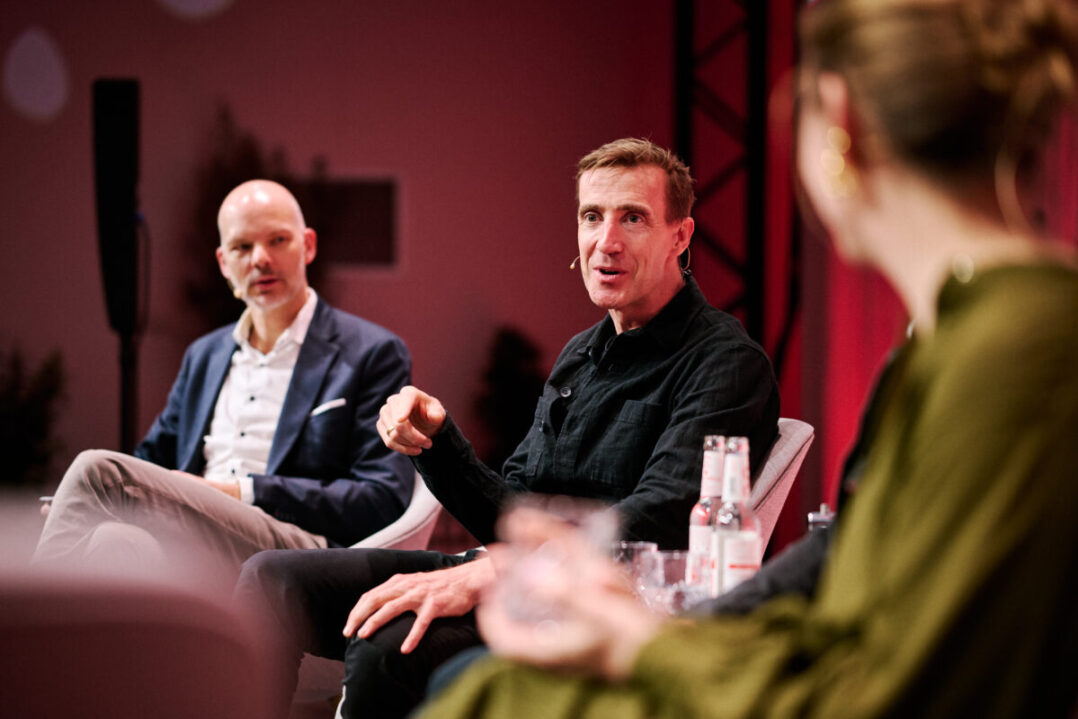
While short-form video fuels initial impulse discovery, live commerce is quickly turning engagement into margin growth. At ECD Munich 2026, we hosted a panel on exactly this question: From Feature to Foundation: How Live Shopping Is Reshaping the Retail Value Chain, with Max Burianek, Ashley Hoare (Head of Commercial Growth, We Are Superb) and Dr. Lara Day (Head of eBay Live Germany).
The panel’s shared view: standalone brand websites are becoming legacy assets. Brands can now close the sale directly at the point of engagement, instead of routing traffic back to a web shop. Live formats give shoppers a richness of information, and something close to a haptic sense of a product, that a static product page can’t replicate.
What the numbers show
On TikTok Shop specifically, that shows up clearly in the numbers. According to the E-Commerce Institut (2026), live shopping has a conversion rate of 9 to 30%, compared to 2 to 3% for standard e-commerce. Furthermore, livestream customers return items 40% less often than customers buying through a regular storefront (E-Commerce Institut, 2026) – largely because live formats close the same information gap that static photography leaves open.
Product returns represent a major drain on European retail, with apparel and footwear return rates in Germany frequently exceeding 30% to 50% (E-commerce Institut, 2026). German consumer protection statutes and consumer habits like multi-size bracket ordering severely erode margins through reverse logistics, inspection labour and seasonal depreciation. Live shopping directly mitigates this profitability drain by solving information asymmetry.
Not every platform plays the same game
Not every platform is chasing the same model. eBay treats live shopping as complementary rather than a discovery engine, layered onto an existing follower base and trust mechanisms like its authenticity guarantee. Two marketplaces, two different jobs for the same format.
Predictions on exact market share vary, but the panel agreed on the direction: live shopping has moved past “test and learn.” It’s no longer just a pilot. It’s already proving to bring in real GMV.
Want to dive into hands-on strategies and tactics needed to sell successfully on TikTok Shop?
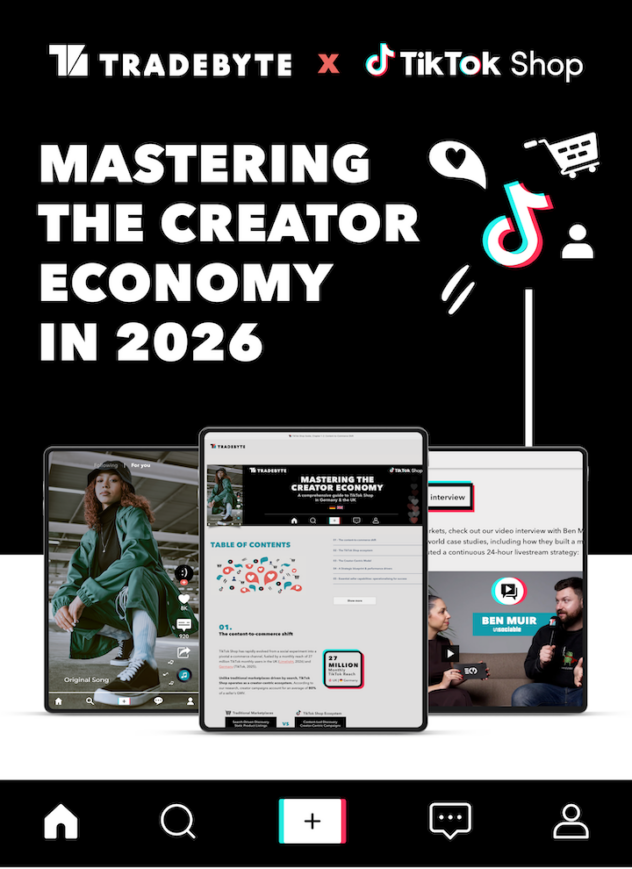
We’ve compiled all the insider partner frameworks and step-by-step tactics into our TikTok Shop strategic playbook, based entirely on our own independent e-commerce research and partner interviews. Moving far beyond content strategies, we cover critical technical and logistical setups to turn virality into real sales. We’ve pulled the strategies so you can capture market share on the largest social commerce channel – and act on it.
*Disclaimer: All market data and insights referenced in this blog are derived from independent third-party research, publicly available industry reports, and our own internal analysis, completely independent of TikTok Shop (TTS).

Nina Fischer
Editor
Nina Fischer is an experienced content writer at Tradebyte, specialising in fashion and luxury e-commerce, marketplace growth, and social commerce.
news